
Join the San Vicente-Waddell Coastal Resilience In-Person Community Workshop!
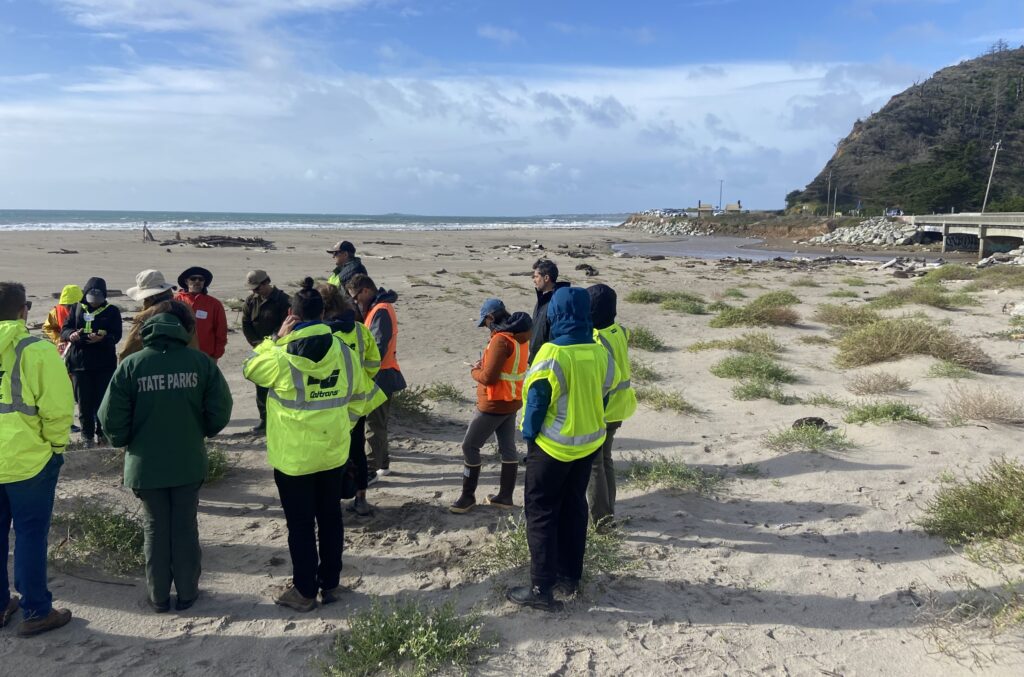
The RTC wants your input on the San Vicente-Waddell Coastal Resilience (SANV-WA) Project!
The project is a partnership between the RTC, Santa Cruz County Resource Conservation District (RCD) and Caltrans District 5 (D5). The existing Highway 1 bridge over Waddell Creek at Big Basin, and the Santa Cruz Branch Rail Line (SCBRL) corridor and Highway 1 bridge over San Vicente Creek at Davenport are vulnerable to coastal climate change impacts. These include sea level rise, storm surge, coastal erosion, flooding, and erosion following wildfires.
Transportation infrastructure also affects the ecology of these important coastal and marsh habitats and may limit their ability to be resilient to climate change. The SANV-WA project will identify short, medium, and long-term actions for viability and resilience to climate stressors on these Caltrans and RTC transportation facilities, in tandem with identifying ecological restoration opportunities within the adjacent tidal, marsh, and riparian areas of Waddell Creek and San Vicente Creek. The SANV-WA Project seeks to develop ecologically based or nature-based solutions that result in resilient natural and built infrastructure.
Attend the RTC’s upcoming community workshop to learn about the project, the ecology of these areas, and climate adaptation options. Share your input with the project team, including which climate stressors you are most concerned about.
Community workshop details:
Tuesday, January 27, 2026
6:00 – 7:30 p.m.
Seymour Marine Discovery Center, La Feliz Room
100 McAllister Way, Santa Cruz, CA 95060
Please contact SANV-WA Project Manager Brianna Goodman at info@sccrtc.org if you have any questions, including “SANV-WA” in the subject line. Sign up for SANV-WA updates at the RTC eNews sign-up page and select “Climate Resilience” Program Updates.
Subscribe to our Mailing List
Latest news and up-to-date info delivered to your inbox
Report a Hazard
Notify us of obstacles or hazards that may inhibit travel.
